We hope to see you at Crisis.
Pages
Labels
- 80 Years War (1)
- 80Years War books (1)
- 80Years War figures (5)
- blog (5)
- Castles/fortress (10)
- demo's (73)
- French Revolution (17)
- French Revolution Dutch info (6)
- French Revolution: Books (1)
- French Revolution: our armies (9)
- Guelders War (7)
- League of Augsburg (20)
- medieval (19)
- museum (13)
- napoleonic (8)
- news (1)
- on tour (17)
- Pike&Shotte (2)
- reenactment (4)
- renaissance (20)
- Roman armies (1)
- SYW (6)
- wargame buildings&terrain (20)
- wargame rules (2)
- wargame shows (86)
- WAS (8)
- website (4)
- ww1 (1)
- ww2 (5)
Saturday, October 19, 2013
Figures for crisis
Well, we put the figures we will be used for the Crisis show on parade. Some additions are being worked on.
We hope to see you at Crisis.
Thursday, October 3, 2013
Ca Ira and Duc de Gueldres
Maybe You have noticed some new items in the header above.
"Ca Ira" was or is still an existing blog about the French Revolutionary period 1792-1797 but the information of "Ca Ira" will be published here on the Alde Garde blog and "Ca-Ira" will be terminated once all the info is put on this blog.
Peter is very interested in the 80 years war, so various info about that period will be published under those headings.
Other headers will also include the ancient, medieval, renaissance and probably Dutch related ww2 info.
Our website, www.aldegarde.nl is still under reconstruction although you can look there for older material.
Sunday, September 29, 2013
Holiday in the Alsace; a WW1 Museum
As you maybe know, in World War 1, the frontline between Germany and France on the eastern border of France, stabilised from 1914 onwards more or less on the heights of the Vosges.
The Vosges is a range of mountains with a max height of 1.400 metres. The Vosges almost run north to south parallel to the Rhine and formed a barrier to the invading German troops. This is clarly shown on this map.
So from 1914 onward a desparate fight between the troops was fought with a lot of casualties. Various museums still commemorate these desperate fights, cemetaries show the amount of killed.
The military road which was build by the French on their side of the mountains still exists today (called: Route des Cretes) and is on this moment a tourist highpoint on which you see the beautifull landscape of the Alsace But it also runs along the battlefield and cemetaries of that period.
When following the route from North to South you can end at the Grand Ballon with its obversatory; it is the highest point of the Vosges.
One of the most famous battlefields in theAlsace is the Hartmannswillerkopf (or in French : Veille Armand) which has a musee and where you can walk over the battlefield. Sadly I couldn't make it but here some information: http://www.getalsaced.com/vieil-armand-world-war-one-memorials.html . I only took a picture of the cemetary.
I visited the "Musee de la Linge" (see: http://www.linge1915.com/index1-an.html ) which is also part of a WW1 battlefield and has a museum. The museum isn't big but they were expanding it. When you are in the neighbourhood, visit it please, it's worth your time.
Some pictures I took, hope you enjoy.
When You visit the Alsace, don't forget Strassbourg or the Haut Koningsbourg castle (see below). A lot to see.
The Vosges is a range of mountains with a max height of 1.400 metres. The Vosges almost run north to south parallel to the Rhine and formed a barrier to the invading German troops. This is clarly shown on this map.
So from 1914 onward a desparate fight between the troops was fought with a lot of casualties. Various museums still commemorate these desperate fights, cemetaries show the amount of killed.
The military road which was build by the French on their side of the mountains still exists today (called: Route des Cretes) and is on this moment a tourist highpoint on which you see the beautifull landscape of the Alsace But it also runs along the battlefield and cemetaries of that period.When following the route from North to South you can end at the Grand Ballon with its obversatory; it is the highest point of the Vosges.
One of the most famous battlefields in theAlsace is the Hartmannswillerkopf (or in French : Veille Armand) which has a musee and where you can walk over the battlefield. Sadly I couldn't make it but here some information: http://www.getalsaced.com/vieil-armand-world-war-one-memorials.html . I only took a picture of the cemetary.
I visited the "Musee de la Linge" (see: http://www.linge1915.com/index1-an.html ) which is also part of a WW1 battlefield and has a museum. The museum isn't big but they were expanding it. When you are in the neighbourhood, visit it please, it's worth your time.
Some pictures I took, hope you enjoy.
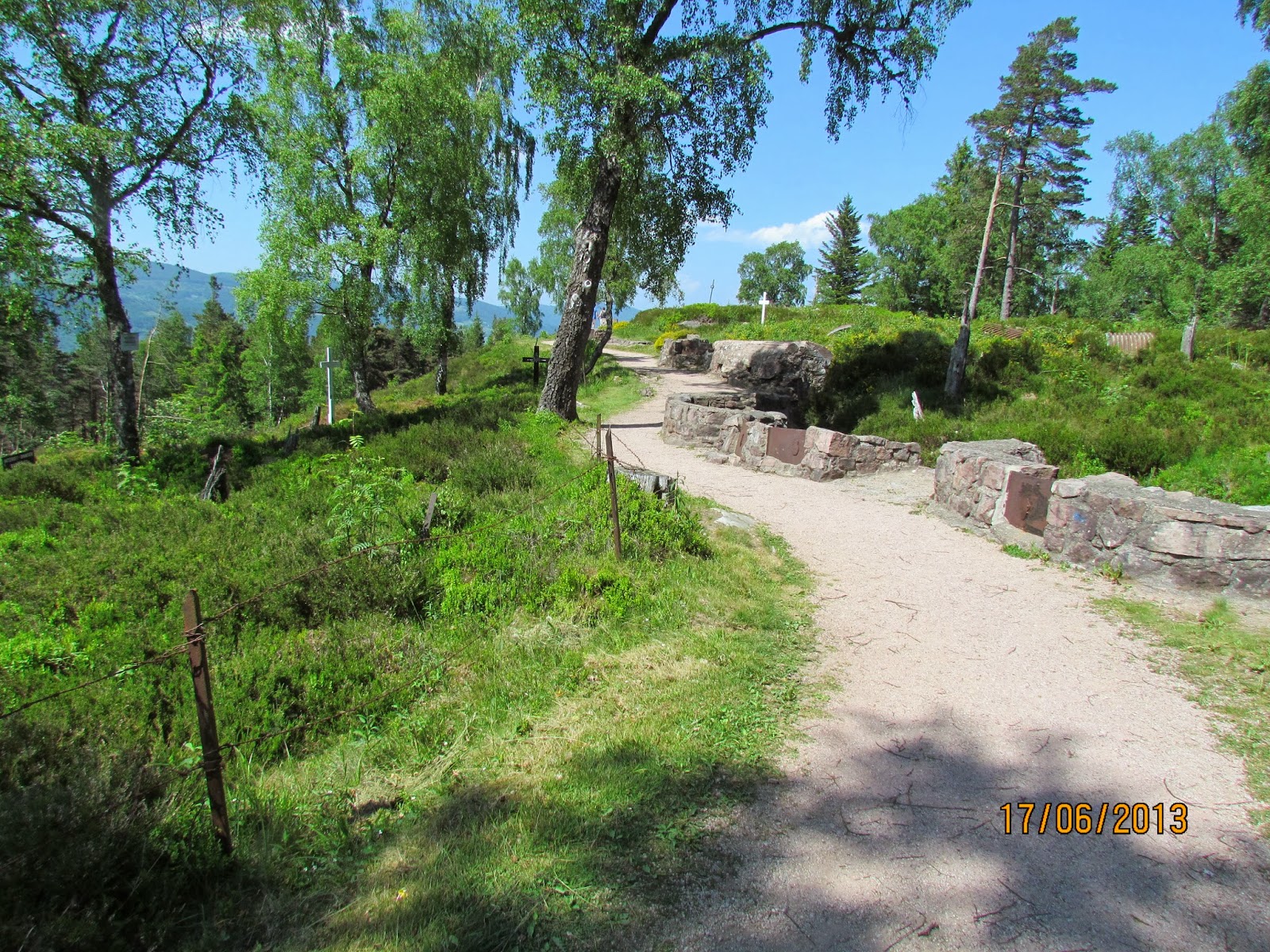
One remark to the picture above: right of the tree I put in an arrow near a pole with a small white shield. There was the French front line. In the near foreground, the german line. Distance between those appr. 10 to 15 meters. Between them some barbed wire. Otherwise they could shake hands.
When You visit the Alsace, don't forget Strassbourg or the Haut Koningsbourg castle (see below). A lot to see.
Wednesday, September 18, 2013
Crisis 2013; change of plans
Well, as Crisis (the Tin Soldier of Antwerp show) is only some months away, it became clear that the time we could spent on our new demo (early Renaissance in the Netherlands) was so little, that we never would finish the demo at the quality we liked it to be.
So back to the drawing board.
The result is, that we will recycle our Medieval armies for a demo of the 1st Guelders War of Succession (1371-1379) but of course with some new terrain.
We will present an imaginary battle outside the walls of Venloo in the eastern part of the Netherlands, then part of the Duchy of Gueldress.
So Peter is building the city walls of Venloo around this period.
Some pictures of the work underway:


So back to the drawing board.
The result is, that we will recycle our Medieval armies for a demo of the 1st Guelders War of Succession (1371-1379) but of course with some new terrain.
We will present an imaginary battle outside the walls of Venloo in the eastern part of the Netherlands, then part of the Duchy of Gueldress.
So Peter is building the city walls of Venloo around this period.
Some pictures of the work underway:

As the city walls of Venloo are all vanished, we also had a look at the tower entrance of Bergen op Zoom. Two pictures of these; the outside and the inside.

Friday, August 16, 2013
Neuf Brisach (Alsace, France)
As you know, in the late 17th/early 18th century Vauban was the fortress builder of Louis XIV and he was building all kinds of fortresses on the borders of France to protect the realm of the Sun King.
One of the cities which he fortified was Breisach which lies on the eastern (German) side of the Rhine.
But at the Peace of Rijswick (1697), which ended the Nine Years War (also called the War of the League of Augsburg), Breisach came in the posession of the Emperor. So a part of the French Rhine frontier was undefended.
Louis ordered Vauban to build a new fortress, but now on the western side of the Rhine.
Work was started in 1699 and finished in 1703. The fortress (or better a fortified town) was build as the master piece of the art of Vauban.
Neuf-Brisach was besieged in 1743 but not taken. In the Franco-Prussian it again was beseiged and taken by Prussian troops and its walls partly destroyed as was one of the gates. A raillroad was built partly through the defenses but other damages were rebuilt and it is today almost the same as 300 years ago.
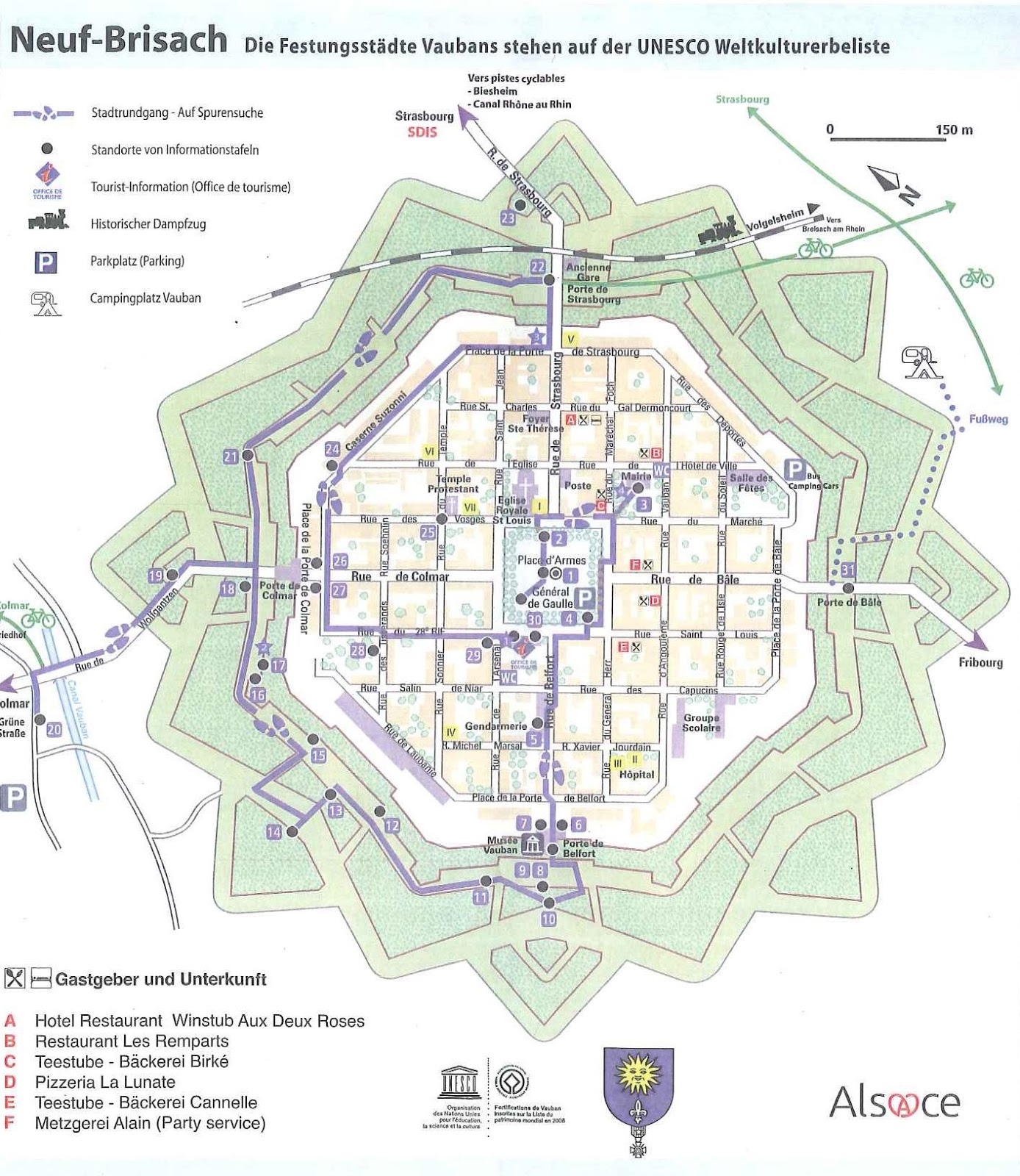
So when I was there on holiday I visited the city and took pictures. The map shows the outline of the fortress and I will try to add to the photos to (most of) these points so you have a better representation.
10. When climbing 10 you get a better impression of the Porte de Belfort and the riverboat

13. and back again in the moat; in the background the passage to nr 15
22. The bridge leading to the Porte de Strassbourg on the northern side
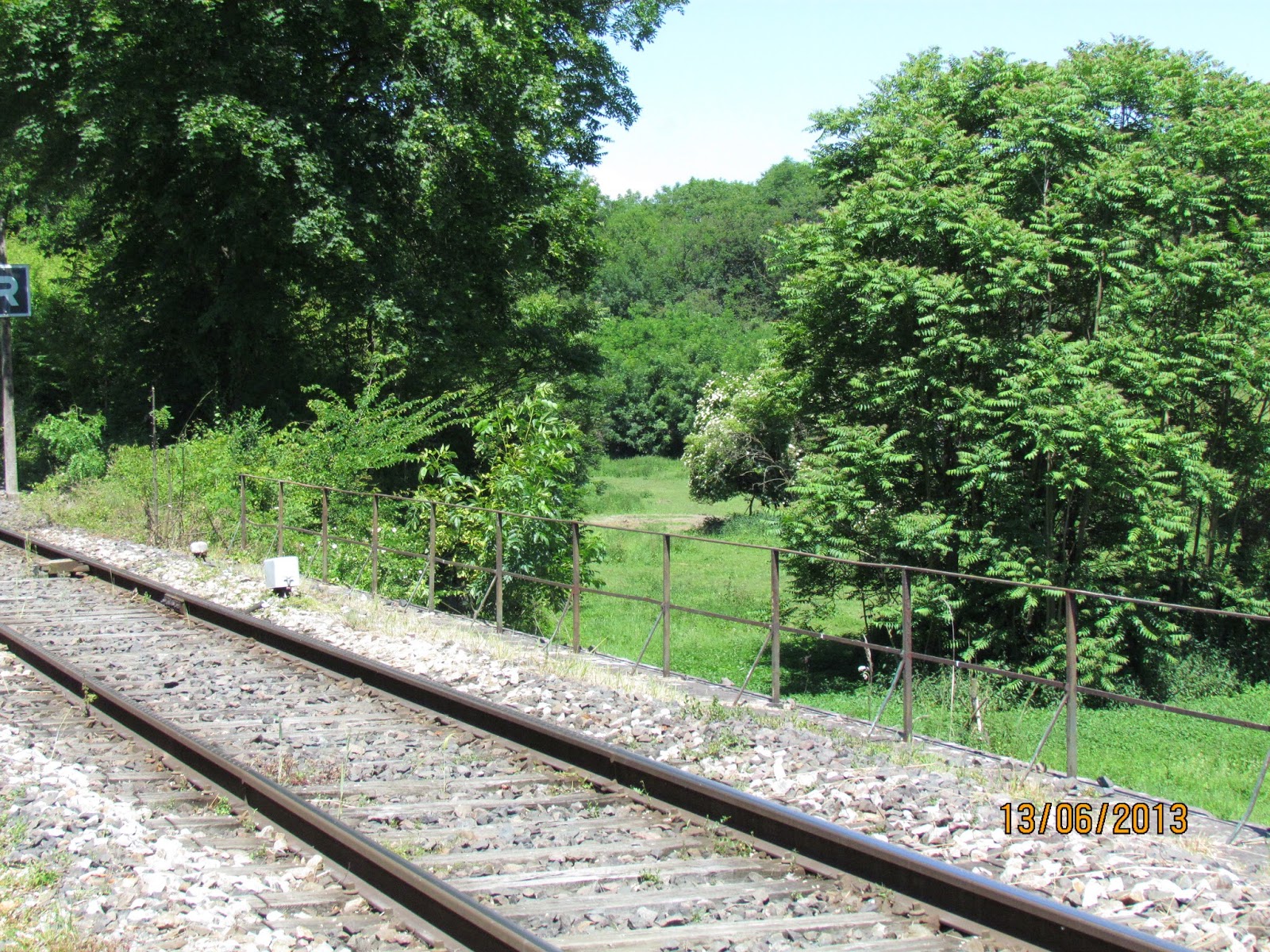
On this part through the defenses a railroad was build
22. The porte de Strassbourg was destroyed in the 1870 Franco-Prussian War and never rebuild in the old fashion.
One of the cities which he fortified was Breisach which lies on the eastern (German) side of the Rhine.
But at the Peace of Rijswick (1697), which ended the Nine Years War (also called the War of the League of Augsburg), Breisach came in the posession of the Emperor. So a part of the French Rhine frontier was undefended.
Louis ordered Vauban to build a new fortress, but now on the western side of the Rhine.
Work was started in 1699 and finished in 1703. The fortress (or better a fortified town) was build as the master piece of the art of Vauban.
Neuf-Brisach was besieged in 1743 but not taken. In the Franco-Prussian it again was beseiged and taken by Prussian troops and its walls partly destroyed as was one of the gates. A raillroad was built partly through the defenses but other damages were rebuilt and it is today almost the same as 300 years ago.
So when I was there on holiday I visited the city and took pictures. The map shows the outline of the fortress and I will try to add to the photos to (most of) these points so you have a better representation.
1. Place d'armes and the fountain. The church in the background is not from this period but a later period building.
7. Walking from the Place d'armes to the musee Vauban which was the Porte de Belfort. The plaque is on the museum wall.
9. Looking through the Porte de Belfort. To the left and right the doors to the museum-closed 12.00 to 14.00 hours. .
In the foreground the stairs leading to the moat while in the moat a iron boat which was used in 1842 to transport stones.
10. in the moat and when looking over your shoulder you see the Porte de Belfort and the stairs leasing to the museum10. When climbing 10 you get a better impression of the Porte de Belfort and the riverboat
10. The sight from 10 outwards to the outerworks; view to the right
and to the left
from 10 to 13. Walking through the moat
nr 13, through the wall
13. When through the wall you can climb on the wall and see in front the bastion nr 1413. and back again in the moat; in the background the passage to nr 15
16. On the right background the small bastion of the main wall
18. And after a small walk the bridge of the Porte de Colmar
The height of the outer wall; my wife is app 1.65m
On this part through the defenses a railroad was build
22. The porte de Strassbourg was destroyed in the 1870 Franco-Prussian War and never rebuild in the old fashion.
And here end the short description of our walk through Neuf Breisach.
Subscribe to:
Posts (Atom)